Managing payroll is one of the most critical responsibilities for any small business in Canada. It’s not just about paying employees on time—it’s about staying compliant with CRA regulations, avoiding costly penalties, and maintaining employee trust. Yet, many business owners find payroll complex, time-consuming, and stressful.
The good news? With the right systems and strategies, you can streamline your payroll process and run it efficiently with confidence.
Why Payroll Management Matters
Payroll is more than just salaries—it includes tax deductions, benefits, and compliance with federal and provincial regulations. Errors in payroll can lead to:
- CRA penalties and interest
- Employee dissatisfaction
- Cash flow disruptions
A streamlined payroll system ensures accuracy, saves time, and supports your business growth.
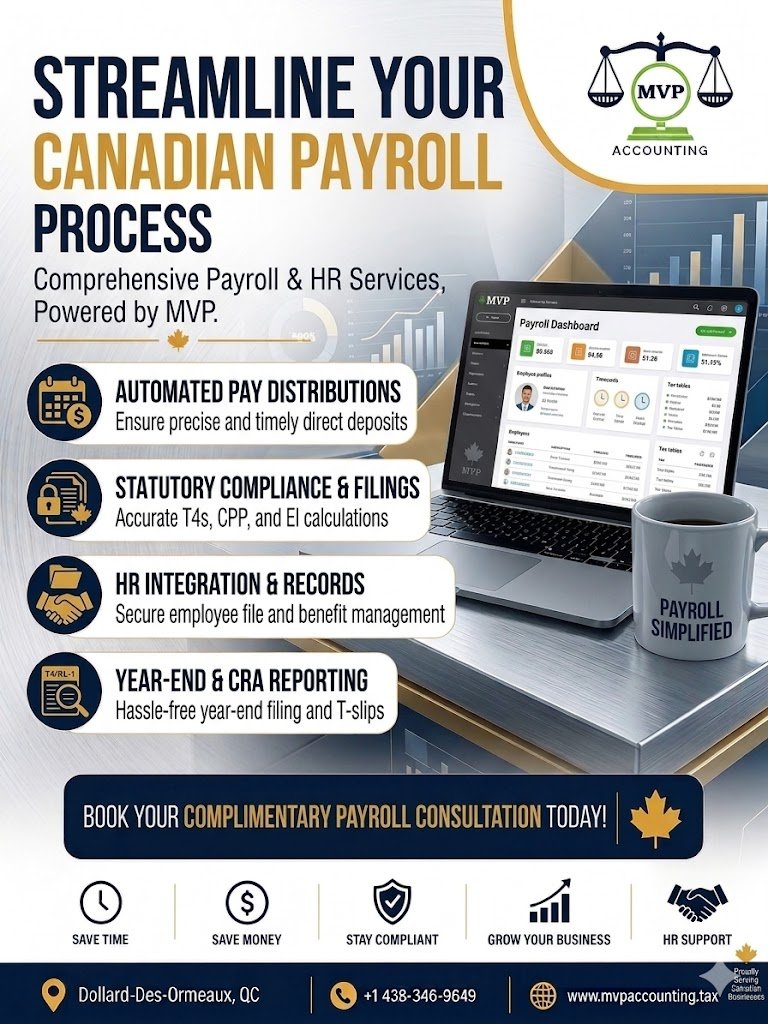
Key Components of Canadian Payroll
To manage payroll effectively, you need to understand its core elements:
1. Employee Information
Maintain accurate records for each employee, including:
- SIN (Social Insurance Number)
- Employment contracts
- Salary or hourly wage details
2. Payroll Deductions
Employers in Canada must deduct and remit:
- CPP (Canada Pension Plan)
- EI (Employment Insurance)
- Income Tax
These deductions must be calculated correctly and submitted to the CRA on time.
3. Employer Contributions
In addition to deductions, employers must also contribute to CPP and EI. These costs should be factored into your payroll budget.
4. Payroll Remittances
Depending on your business size, remittances may be required monthly, quarterly, or more frequently. Missing deadlines can result in penalties.
5. Year-End Reporting
At the end of the year, businesses must:
- Issue T4 slips to employees
- File a T4 Summary with the CRA
Accurate records throughout the year make this process much easier.
Common Payroll Mistakes to Avoid
Many small businesses struggle with payroll due to avoidable errors:
❌ Misclassifying employees vs. contractors
❌ Incorrect tax calculations
❌ Missing CRA deadlines
❌ Poor record-keeping
❌ Not updating payroll for regulation changes
Avoiding these mistakes is key to staying compliant and stress-free.
Smart Tips to Streamline Your Payroll
✅ 1. Use Payroll Software
Automated payroll systems can:
- Calculate deductions accurately
- Generate pay slips instantly
- Track employee records
This reduces manual errors and saves time.
✅ 2. Set a Payroll Schedule
Consistency is key. Choose a schedule (weekly, bi-weekly, or monthly) and stick to it. This helps with cash flow planning and employee satisfaction.
✅ 3. Stay Updated with CRA Rules
Tax rates and regulations can change. Make sure your payroll system is updated or work with a professional who keeps you compliant.
✅ 4. Maintain Organized Records
Keep digital records of:
- Pay slips
- Tax filings
- Employee details
This ensures you’re always audit-ready.
✅ 5. Outsource to Professionals
If payroll feels overwhelming, outsourcing can be a smart move. Professional accounting services ensure:
- Accurate calculations
- Timely remittances
- Full compliance with CRA
Benefits of Streamlined Payroll
When your payroll process is efficient, your business benefits in many ways:
✔ Saves time and reduces administrative workload
✔ Minimizes costly errors and penalties
✔ Improves employee trust and satisfaction
✔ Provides better financial control
✔ Supports business growth
Final Thoughts
Payroll doesn’t have to be complicated. By implementing the right tools, staying organized, and following best practices, you can streamline your Canadian payroll process and focus on growing your business.
💼 Need Help with Payroll?
Professional bookkeeping and accounting services can take the stress out of payroll management. From calculations to compliance, expert support ensures your payroll runs smoothly—so you can focus on what matters most.