Managing a successful business isn’t just about increasing sales—it’s about knowing where your money comes from, where it goes, and how to plan for the future. That’s where a business budget becomes one of the most valuable financial tools you can have.
Many entrepreneurs believe budgeting is time-consuming or only necessary for large corporations. In reality, a simple and well-structured budget can be created in as little as 30 minutes, giving you greater control over your finances and helping you make smarter business decisions.
Whether you’re launching a startup, running a growing company, or managing an established business, this guide will show you how to create a practical business budget quickly and effectively.
What Is a Business Budget?
A business budget is a financial plan that estimates your expected income and expenses over a specific period, usually monthly, quarterly, or annually.
It serves as a roadmap for your business, helping you:
- Track income and expenses
- Control spending
- Improve cash flow
- Set financial goals
- Plan for growth
- Prepare for unexpected costs
A budget allows you to make informed decisions based on real financial data rather than guesswork.
Why Every Business Needs a Budget
Without a budget, it’s easy to overspend, underestimate expenses, or miss opportunities to invest in growth.
A well-prepared budget helps you:
- Monitor business performance
- Avoid cash shortages
- Allocate resources wisely
- Identify unnecessary expenses
- Prepare for tax obligations
- Build financial confidence
Businesses that regularly review and update their budgets are generally better equipped to handle economic changes and unexpected challenges.
What You’ll Need Before You Start
Before creating your budget, gather the following information:
- Recent bank statements
- Profit and Loss (Income Statement)
- Previous budgets (if available)
- Sales reports
- Outstanding invoices
- Utility bills
- Payroll information
- Loan repayment schedules
- Subscription and software costs
Having these documents ready will make the budgeting process faster and more accurate.
Step 1: Calculate Your Monthly Revenue (5 Minutes)
Start by estimating how much money your business expects to earn each month.
Include all income sources, such as:
- Product sales
- Service revenue
- Consulting fees
- Online sales
- Rental income
- Other business income
Example
| Revenue Source | Monthly Amount |
|---|---|
| Product Sales | $25,000 |
| Service Income | $10,000 |
| Consulting | $5,000 |
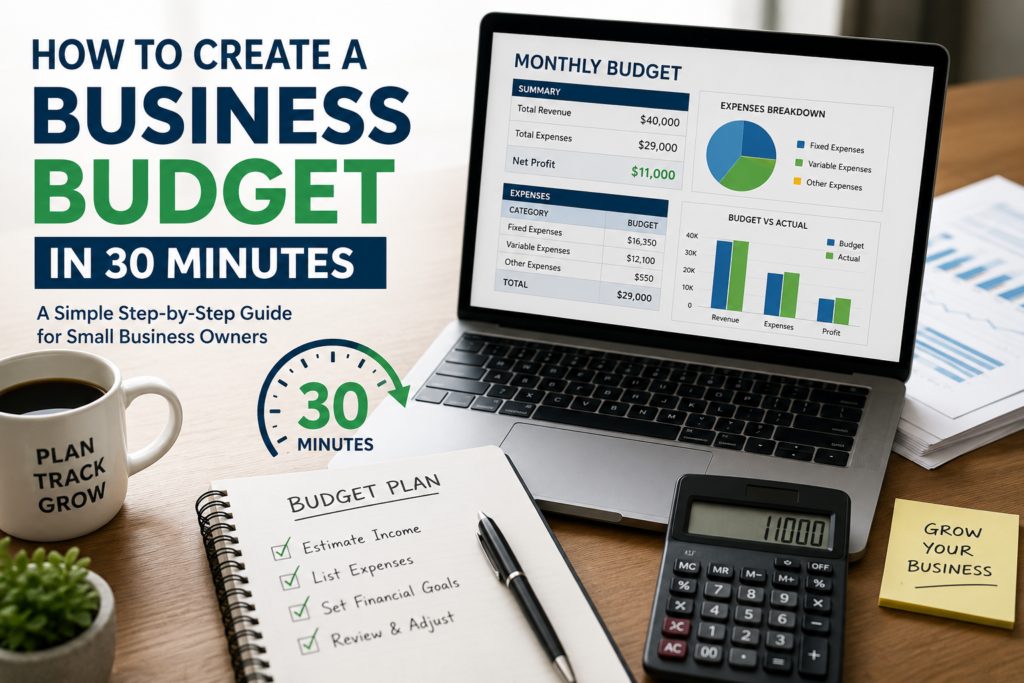
| Total Revenue | $40,000 |
Be realistic. If your income varies by season, use an average from the past six to twelve months.
Step 2: List Your Fixed Expenses (5 Minutes)
Fixed expenses remain relatively consistent each month.
Examples include:
- Office rent
- Employee salaries
- Insurance
- Internet
- Phone services
- Accounting fees
- Software subscriptions
- Loan repayments
Example
| Fixed Expense | Monthly Cost |
|---|---|
| Office Rent | $2,500 |
| Salaries | $12,000 |
| Insurance | $500 |
| Internet & Phone | $300 |
| Software | $250 |
| Loan Payment | $800 |
| Total Fixed Expenses | $16,350 |
Step 3: Estimate Variable Expenses (5 Minutes)
Variable expenses change depending on your business activity.
Examples include:
- Inventory purchases
- Marketing campaigns
- Fuel
- Shipping
- Travel
- Utilities
- Office supplies
- Repairs and maintenance
Estimate these costs based on previous months.
Example
| Variable Expense | Monthly Cost |
|---|---|
| Inventory | $8,000 |
| Marketing | $2,000 |
| Shipping | $1,200 |
| Utilities | $600 |
| Office Supplies | $300 |
| Total Variable Expenses | $12,100 |
Step 4: Include Occasional or Seasonal Expenses (5 Minutes)
Many businesses forget to budget for expenses that don’t occur every month.
Examples include:
- Equipment upgrades
- Annual software renewals
- Tax payments
- Employee bonuses
- Business licenses
- Professional training
- Holiday marketing campaigns
Estimate the annual cost and divide it by 12 to create a monthly allocation.
Example
Annual equipment maintenance: $2,400
Monthly budget allocation: $200
Planning ahead prevents financial surprises.
Step 5: Calculate Your Expected Profit (5 Minutes)
Now subtract your total expenses from your projected revenue.
Formula
Profit = Total Revenue − Total Expenses
Example:
Revenue: $40,000
Fixed Expenses: $16,350
Variable Expenses: $12,100
Seasonal Allocation: $550
Total Expenses = $29,000
Expected Monthly Profit = $11,000
This figure helps you understand whether your business is on track financially.
Step 6: Set Financial Goals (3 Minutes)
Your budget should support your business objectives.
Examples include:
- Increase monthly sales by 10%
- Reduce unnecessary expenses by 5%
- Build a three-month emergency fund
- Invest in new equipment
- Hire additional staff
- Expand marketing efforts
Having measurable goals makes budgeting more meaningful.
Step 7: Review and Adjust Monthly (2 Minutes)
A budget isn’t something you create once and forget.
Review it every month by comparing:
- Budgeted income vs. actual income
- Budgeted expenses vs. actual expenses
- Expected profit vs. actual profit
Identify differences and adjust your budget accordingly.
Regular reviews help keep your business financially healthy.
Common Budgeting Mistakes to Avoid
Even experienced business owners make budgeting mistakes.
Avoid these common pitfalls:
Overestimating Revenue
Optimistic sales projections can create unrealistic budgets.
Forgetting Small Expenses
Small recurring costs like software subscriptions or bank fees add up over time.
Ignoring Seasonal Changes
Some businesses experience fluctuations throughout the year.
Adjust your budget to reflect busy and slow seasons.
Mixing Personal and Business Expenses
Always maintain separate business accounts.
This improves bookkeeping and simplifies tax preparation.
Never Updating the Budget
Your budget should evolve as your business grows.
Review it regularly to keep it accurate.
Tips to Make Budgeting Easier
You don’t have to manage your budget manually.
Consider using accounting software that automatically tracks income and expenses.
Popular options include:
- QuickBooks Online
- Xero
- Sage
- FreshBooks
- Wave Accounting
These tools generate financial reports, monitor cash flow, and simplify budgeting.
Working with a professional accountant or bookkeeper can also help ensure your budget reflects accurate financial data and supports long-term planning.
Benefits of a Well-Planned Business Budget
A realistic budget provides more than just numbers.
It helps you:
- Improve cash flow management
- Make informed business decisions
- Reduce unnecessary spending
- Plan future investments
- Prepare for tax season
- Secure financing more easily
- Increase business profitability
- Achieve long-term financial stability
Businesses with clear financial plans are generally better prepared to adapt to market changes and seize growth opportunities.
Sample Monthly Budget Template
| Category | Budget |
|---|---|
| Revenue | $40,000 |
| Fixed Expenses | $16,350 |
| Variable Expenses | $12,100 |
| Seasonal Allocation | $550 |
| Total Expenses | $29,000 |
| Estimated Profit | $11,000 |
You can recreate this template in Excel, Google Sheets, or your preferred accounting software and update it each month.
Frequently Asked Questions
How often should I update my business budget?
Review your budget every month to ensure it reflects your current financial situation and business goals.
Should startups create a business budget?
Yes. A budget helps startups manage limited resources, monitor cash flow, and make informed spending decisions from day one.
What’s the difference between a budget and a cash flow forecast?
A budget estimates expected income and expenses over a period, while a cash flow forecast predicts when money will actually enter and leave your business. Both are important for effective financial planning.
Can accounting software create a business budget?
Most modern accounting software includes budgeting and reporting features that make it easier to track financial performance and compare actual results with planned figures.
Final Thoughts
Creating a business budget doesn’t have to be complicated or time-consuming. By setting aside just 30 minutes, you can develop a financial plan that gives you greater visibility into your income, expenses, and profitability.
A well-managed budget helps you stay in control, prepare for future opportunities, and respond confidently to financial challenges. Combined with accurate bookkeeping and regular financial reviews, budgeting becomes a powerful tool for sustainable business growth.
If you’re unsure where to start or want a budget tailored to your business, partnering with experienced accounting professionals can help you create a strategy that supports your financial goals while keeping your business on the path to long-term success.